Google's Email Verification Protocol: What It Means for Signup Verification
Google is quietly testing something that could reshape how millions of websites confirm a new subscriber's email address — and it has nothing to do with clicking a link in your inbox.
The proposal is called the Email Verification Protocol (EVP), and it lets Chrome confirm that a visitor actually owns the email address they just typed into a signup form, without ever sending a confirmation email. For an email verification company like Bouncify, this is more than an interesting headline. It touches the exact problem we help businesses solve every day: how do you know an email address is real, reachable, and worth keeping on your list?
Here's our take on what EVP actually changes, and what it doesn't.
How EVP Works, in Plain Terms
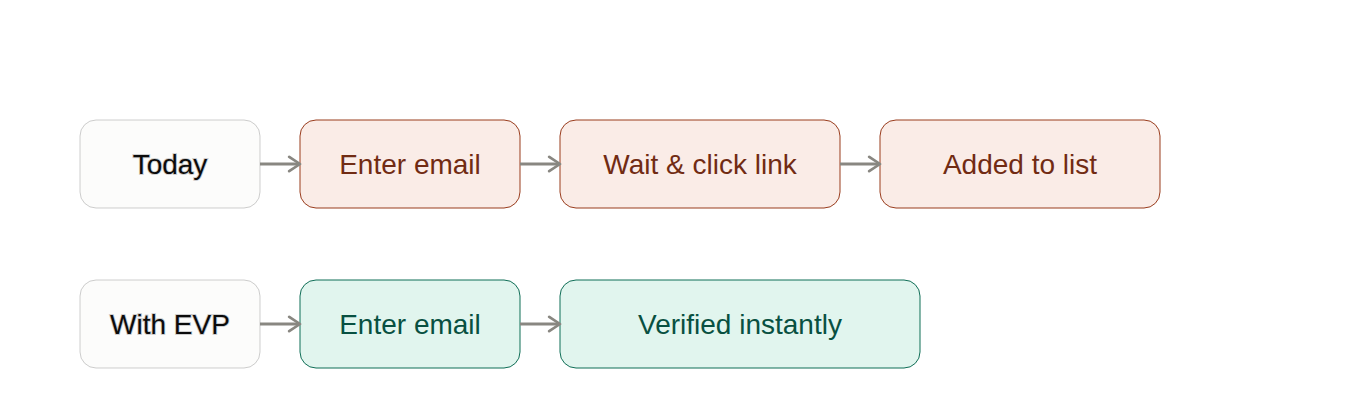
Right now, most signup forms rely on a simple pattern: enter your email, receive a message, click a link, get added to the list. It works, but it leaks users at every step — some never open the email, some never find it in a crowded inbox, and some simply move on with their day.
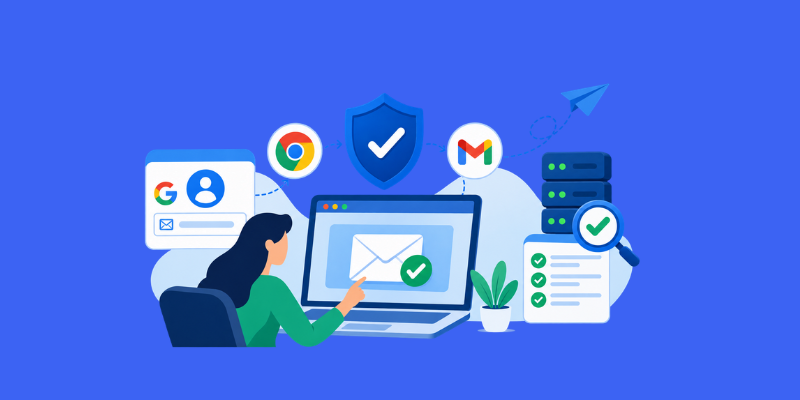
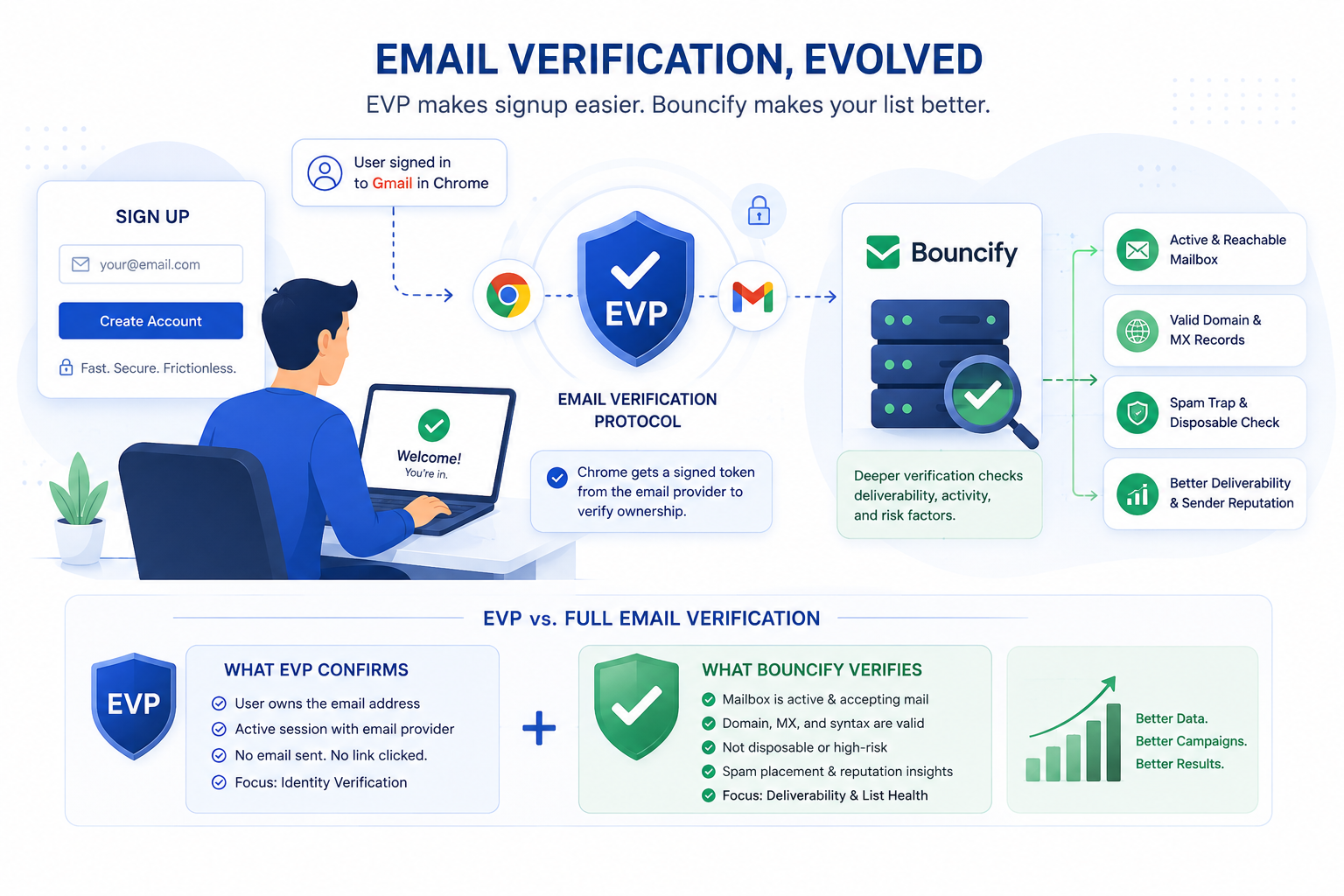
EVP proposes a shortcut. If a visitor is already signed into Gmail (or another supporting provider) inside Chrome, the browser can vouch for that address directly with the provider behind the scenes. The website receives a signed token confirming ownership, and the visitor never has to leave the page. No inbox check, no waiting, no lost signups.
Why This Matters for List Quality
At Bouncify, we spend a lot of time on one question that EVP doesn't fully answer: is this address deliverable, not just owned?

Those are two different things. A person can absolutely own an email address that's about to hit its storage limit, sits behind an aggressive spam filter, or belongs to a domain with a shaky sending reputation. Ownership confirms identity. It says nothing about:
Whether the mailbox is active and accepting mail Whether the domain has valid MX records and isn't about to expire Whether the address is a disposable or role-based inbox unlikely to engage Whether your future campaigns will land in the inbox or the spam folder
That's the gap email verification services exist to close, and it's a gap EVP was never designed to fill. Google's own documentation is candid about this: EVP confirms a user has an active session with their email provider, not that any given message will actually reach them.
Faster Signups, But a Missing Layer
If EVP is adopted at scale, we expect signup conversion rates to climb. Removing a click-away, wait-and-check step from any form usually does. That's a win for growth teams.
But it also means businesses will lose a signal they've quietly relied on for years: the simple act of clicking a confirmation link has always doubled as a soft proof of engagement. Take that step away, and a list can fill up faster with emails that are technically "verified" by EVP but have never truly demonstrated interest.
That's where we think the real shift will happen — not in whether businesses verify emails, but in when and how they do it. If EVP handles the "is this a real, owned email address" question at the point of signup, tools like Bouncify become even more useful for the next question: "is this address still good, and will it actually help or hurt my sender reputation?"
What We're Recommending to Bouncify Customers
Whether or not EVP becomes a widely supported standard, a few habits will keep any email program healthy:
- Keep verifying at signup. Real-time verification catches typos, disposable domains, and dead inboxes before they ever reach your list — something EVP doesn't check for.
- Re-verify periodically. Ownership at signup doesn't guarantee deliverability six months later. Regular list cleaning still matters.
- Don't drop the welcome email. Even if a confirmation click disappears, a strong first email still builds the engagement history that inbox providers use to judge your future sends.
- Watch adoption closely. EVP is currently an Origin Trial, meaning it's still gathering feedback from Chrome developers. Broad support from other browsers and providers isn't guaranteed, and definitely isn't immediate.
The Bottom Line
Google's Email Verification Protocol solves a real problem: too many people abandon signup forms while waiting on a confirmation email. That's worth fixing. But "verified" and "deliverable" have never meant the same thing, and EVP doesn't change that.
If anything, a faster, frictionless signup process makes ongoing email verification more important, not less. The businesses that treat EVP as a starting point — not a substitute for real list hygiene — will be the ones whose emails keep landing in the inbox long after the signup button is clicked.